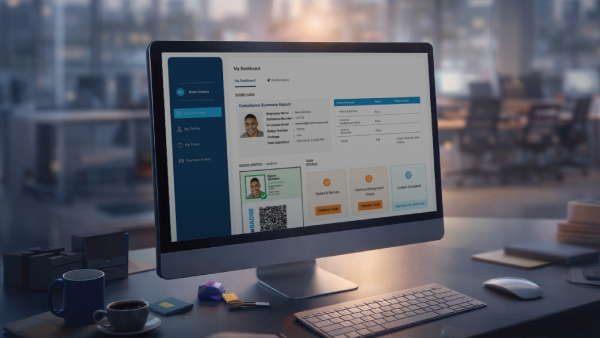
 Municipal governments are adopting centralized compliance management platforms to simplify workforce safety and regulatory requirements.
By Michael Thompson, Chief Commercial Officer, oneBADGE, an ISB Global Service
This article was originally published in the July 2026 issue of Municipal World.
Modernizing Municipal Compliance Management
Municipal governments across Canada are under increasing pressure to modernize operations while upholding strong safety standards, regulatory compliance and public trust.
Municipal workforces are expanding and diversifying, while municipalities rely more heavily on contractors, volunteers and third-party service providers.
As a result, credential verification, background screening, certification tracking and eligibility monitoring have become core elements of risk management and operational accountability.
Yet in many municipalities, these functions remain fragmented, managed across multiple departments, systems and manual processes that can introduce delays and risk.
Innovation in digital compliance platforms is helping address these challenges by bringing identity, credentialing and verification into a single, secure environment. These tools give municipalities clearer visibility into compliance and eligibility status and more reliable ways to manage safety requirements across their workforce.
The Growing Complexity of Municipal Compliance
Municipalities oversee a broad range of individuals who must meet specific safety, training and regulatory requirements. This includes:
- Full-time employees
- Seasonal staff
- Contractors
- Volunteers
- Program leaders
- Background screening
- Identity verification
- Credential verification
- Training certifications
Managing these requirements manually, or across disconnected systems, is time-consuming and leaves room for error. It also makes it difficult to confirm in real time whether individuals remain eligible. When compliance records are incomplete, outdated or hard to access, operational risk grows.
These challenges are compounded by rising expectations for transparency. Municipal leaders need to demonstrate that screening and compliance procedures are followed, especially when public safety is at stake.
 How Fragmented Compliance Processes Increase Operational Risk
In many municipalities, compliance workflows evolved gradually. Different departments adopted their own tools, spreadsheets and tracking methods to meet specific needs. While these systems may work in isolation, they often lack integration.
This fragmentation creates several challenges:
- Increased administrative workload
- Manual tracking of certifications and documentation
- Reduced accuracy across multiple systems
- Greater potential for compliance gaps
- More complex auditing and reporting
When information is stored in multiple locations, it becomes harder to ensure records are current and complete. Manual processes also make regulatory reviews and investigations significantly more time-consuming.
As municipalities modernize, many are rethinking how compliance and credential verification are managed.
Benefits of Centralized Compliance Platforms
Advances in digital infrastructure are enabling a fundamentally different approach.
Centralized compliance platforms bring together:
- Background screening
- Credential tracking
- Training verification
- Identity validation
Practical benefits include:
- Reduced manual administrative work
- Greater visibility into outstanding requirements
- Consistent verification processes
- Automated status updates when credentials expire
- Clear audit trails and reporting
- Improved public safety through verified eligibility
 How Centralized Compliance Systems Work
Centralized platforms function as a secure digital hub.
From a single dashboard, administrators can:
- Initiate background screening
- Verify identities in real time
- Manage credentials and certifications
- Track training requirements
- Set role-specific eligibility criteria
Once eligibility is confirmed, individuals receive secure digital credentials that can be verified instantly, simplifying compliance management through an automated and auditable process.
Municipal Applications for Centralized Compliance Management
Centralized compliance platforms support many municipal operations.
Contractors
Infrastructure projects often involve numerous external service providers with unique regulatory requirements. A centralized system helps verify contractor eligibility while maintaining accurate records.
Recreation Programs
Camp staff, instructors and volunteers require background screening, identity verification and training validation. A centralized platform helps ensure standards are applied consistently.
Public Works, Transit and Utilities
Employees working in regulated roles often require certifications that must be renewed periodically. Digital tracking helps prevent certification lapses.
Volunteer Programs
Volunteer screening and verification become more consistent through standardized compliance processes.
Bringing these functions together creates a more reliable and consistent approach to municipal compliance management.
 Faster Onboarding and Reduced Administrative Burden
Beyond reducing operational risk, centralized compliance platforms improve day-to-day efficiency.
When compliance information is easily accessible, municipalities can:
- Onboard employees faster
- Accelerate contractor approvals
- Launch programs more efficiently
- Reduce manual administrative work
- Improve workforce planning
Better visibility into compliance status also allows municipal leaders to identify potential issues before they disrupt operations.
Building Public Trust Through Transparency
Any digital platform handling sensitive screening and credential information must be secure, reliable and transparent.
Centralized compliance platforms promote consistency by providing:
- Standardized processes
- Accurate credential verification
- Clear audit records
- Reliable compliance documentation
 The Future of Municipal Compliance Management
Municipal governments continue to modernize across infrastructure, workforce management and citizen services. Compliance and credential management remain an important part of this transformation.
Centralized compliance management platforms represent a practical innovation that addresses real operational challenges.
By bringing identity verification, credentialing and background screening into one secure platform, municipalities can improve safety outcomes, reduce administrative burden and strengthen their overall compliance posture.
As workforces evolve and regulatory expectations become more complex, the ability to efficiently manage—and demonstrate—compliance will become increasingly important.
These platforms are helping municipalities build more modern operations while delivering the safety, accountability and transparency their communities expect.
Michael Thompson is the Chief Commercial Officer at oneBADGE, an ISB Global Service. With an exceptional track record in Canada’s technology and corporate sectors, he is widely recognized for his customer-centric approach and leadership in advancing compliance and operational innovation.
Have Questions?
Connect with our team to learn more about oneBADGE solutions and resources.
 CONTACT US
Connect with our team to learn more about oneBADGE solutions and resources.
CONTACT US